Hibika Font Review: Adding Whimsy to Brand Identity
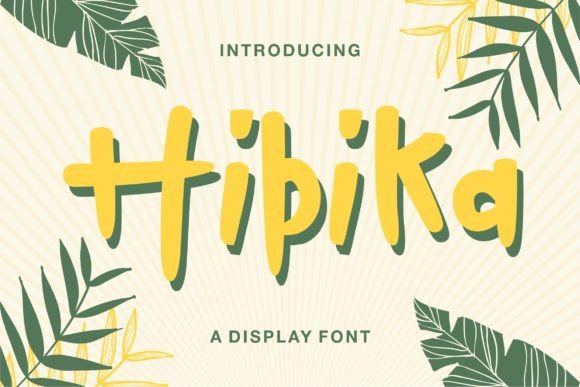
There is a specific moment in every boutique branding project where the clean, modern sans serif just feels too sterile. I was recently staring at a brand board for an artisanal candle maker, and while the geometric typeface was perfectly legible, it lacked the warmth of the hand-poured soy wax and dried florals the client actually sells. The design felt manufactured rather than crafted. This is usually when I start digging through my library of display fonts looking for something with a pulse. That search led me to test Hibika, a whimsical display font that immediately caught my eye for its irregular letterforms and unpolished charm.
As a brand designer, I am often skeptical of "quirky" fonts because they frequently sacrifice usability for novelty. However, after testing Hibika across a full identity system—from logo concepts to packaging mockups—I found it occupies a sweet spot between playful character and functional typography. It isn't trying to be a workhorse text face; it is a specialized tool for injecting personality into visual identities that need to feel human, approachable, and distinct.
First Impressions on the Digital Canvas
Opening Hibika in my design software, the first thing I noticed was the deliberate inconsistency in the baseline and x-height. In modern typography, we are trained to seek uniformity, but Hibika breaks those rules intentionally. The letters dance slightly above or below the line, creating a rhythm that mimics organic handwriting without looking like a messy script. When I typed out the client’s brand name, the result wasn't a static wordmark; it was a shape with inherent movement.
This visual texture is what makes Hibika effective as a creative font for lifestyle brands. It avoids the uncanny valley of digital perfection. For the candle brand project, this meant the logo draft instantly communicated "handmade" before I even added color or illustration. The irregularity acts as a visual cue for authenticity, which is crucial when you are trying to differentiate a small business from mass-market competitors. It feels less like a premium font downloaded from a marketplace and more like a custom lettering piece drawn specifically for the project.
Testing Hibika Across Brand Touchpoints
A font might look beautiful in a specimen sheet but fail in production, so I put Hibika through a realistic stress test across various brand assets. Here is how it performed in practical application:
- Logo Design: Hibika shines brightest here. Because the letterforms are unique, the font itself does heavy lifting in establishing brand recognition. I found that keeping the logo simple and letting the typeface provide the detail worked better than adding complex icons. The quirky shapes create natural negative space opportunities for subtle brand marks.
- Packaging and Labels: On a 3-inch candle label, readability is paramount. I used Hibika strictly for the product name (e.g., "Lavender & Sage") at a larger point size. At this scale, the charm translates well to print. However, for the ingredient list and safety warnings, I had to switch to a clean sans serif. Hibika is not designed for dense information hierarchy.
- Social Media Graphics: This is where the font truly sings. Instagram carousels and Pinterest pins require quick visual hooks. Using Hibika for short, punchy headlines like "New Scent Drop" or "Slow Living Tips" created immediate engagement. The playful style stops the scroll much faster than standard bold headers.
- Website Headers: I tested Hibika in the hero section of the site mockup. It adds significant warmth to the user experience, making the digital storefront feel welcoming. Just ensure you have a web-safe fallback or proper webfont files loaded, as the irregularities can sometimes render oddly on low-resolution screens if not optimized correctly.
- Business Cards: On a standard 3.5x2 inch card, space is limited. I used Hibika only for the business name on the front. For the back side containing contact details and services, the font was too distracting. It serves best as an accent font in stationery design rather than a primary information carrier.
The Art of Pairing: Balancing Whimsy with Structure
Hibika has a strong personality, which means it demands a supportive partner. If you pair it with another decorative or handwritten font, the design will quickly become chaotic and illegible. During my testing, I found that contrast is the key to successful font pairing with this typeface.
For the candle brand, I paired Hibika with a neutral, geometric sans serif for body copy and secondary headers. The clean lines of the supporting font grounded the whimsy of Hibika, ensuring the overall brand identity remained professional and trustworthy. Alternatively, for a more editorial or traditional vibe, a classic serif font works beautifully. The juxtaposition of old-world serif structure with Hibika’s modern playfulness creates a sophisticated tension that feels high-end yet accessible.
When building your typography system, treat Hibika as the lead singer and your secondary font as the rhythm section. Let Hibika handle the emotional hooks—headlines, logos, callouts, and short phrases—while your reliable sans serif or serif handles the storytelling, navigation, and fine print. This hierarchy ensures that the quirkiness enhances the user experience rather than hindering communication.
Practical Limitations and Licensing Considerations
While I thoroughly enjoyed working with Hibika, it is important to be realistic about where it does not belong. This is strictly a display font. Do not attempt to use it for paragraphs, captions under 14pt, or any interface elements requiring rapid scanning. The irregular letterforms, while charming at large sizes, reduce legibility significantly when scaled down. If your project requires extensive body text or formal corporate communication, Hibika should remain in your accent toolkit, not your primary selection.
Before finalizing any client work, always review the commercial font licensing. Display fonts often have specific restrictions regarding the number of users, web impressions, or merchandise sales. Since Hibika is perfect for product packaging and print-on-demand items, verify that your license covers these specific commercial uses. Nothing ruins a successful rebrand faster than a licensing dispute. Additionally, check for multilingual support if your client operates internationally; some whimsical display fonts lack extended character sets, which can force you to find a mismatched alternative for accented characters.
Ultimately, Hibika is a delightful addition to the designer’s arsenal for projects that require heart. It bridges the gap between polished professionalism and artisanal authenticity. Whether you are refreshing a café menu, designing skincare labels, or building a creative studio identity, this typeface offers a unique voice that standard libraries simply cannot match. Test it, pair it wisely, and let it bring a touch of necessary fun to your next brand identity project.