Blackyline Font Review: A Cute Display Typeface for Playful Branding
There is a specific moment in every boutique branding project where the mood board looks perfect, but the typography feels too serious. I experienced this exact friction last week while refreshing the visual identity for a local artisanal bakery. The client wanted something that felt handmade and jolly without looking childish or unprofessional. After testing several standard rounded sans serifs that felt too corporate and various scripts that were illegible at small sizes, I opened up Blackyline. This cute display font immediately shifted the energy of the brand board, offering a unique decorative style that balanced whimsy with commercial viability.
As a brand designer, I am often skeptical of fonts described as "cute" because they frequently sacrifice legibility for novelty. However, after testing Blackyline across logo concepts, packaging mockups, social media templates, and web headers, it proved to be a surprisingly versatile tool for specific creative niches. It is not a workhorse typeface for body copy, but as a personality-driven display font, it brings a distinct charm that helps creative ideas stand out in saturated markets.
Visual Personality and First Impressions
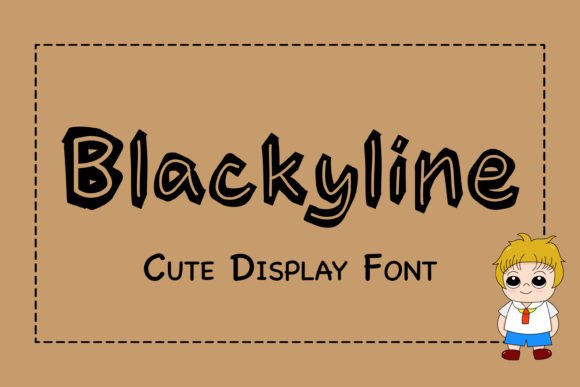
Blackyline falls squarely into the category of modern decorative typography. Its construction is bold and confident, featuring rounded terminals and a slightly irregular baseline that mimics the warmth of hand-lettering. Unlike rigid geometric fonts, Blackyline has a "jolly" rhythm that feels organic rather than manufactured. When I first typed out the bakery’s name, the letterforms interacted in a way that felt custom-drawn rather than digitally generated.
The weight distribution is particularly noteworthy for a display font. Many cute fonts suffer from being too thin to reproduce well on textured paper or too thick to remain legible on screens. Blackyline sits in a comfortable middle ground. The strokes are substantial enough to hold ink on kraft paper packaging but retain enough negative space to prevent filling in when used on dark backgrounds. This balance makes it an excellent candidate for brands that need to bridge physical and digital touchpoints seamlessly.
Performance Across Brand Touchpoints
A font might look beautiful in a specimen sheet but fail in application. I tested Blackyline in five realistic scenarios to gauge its practical utility in a professional workflow.
Logo Design and Wordmarks
For the primary logo lockup, Blackyline performed exceptionally well. Because the characters have unique quirks, the wordmark felt proprietary without requiring extensive customization. I did adjust the tracking slightly tighter than default to create a more cohesive unit, which is common practice with display fonts. The result was a friendly, approachable logotype that communicated "handmade quality" instantly. However, I would advise against using this font for complex acronyms or very long business names, as the decorative nature can become visually noisy at smaller scales.
Packaging and Product Labels
This is where Blackyline truly shines. On a coffee bag mockup and sticker labels, the font maintained its character even when scaled down to 18pt. The bold forms provided excellent contrast against matte pastel backgrounds. For product names like "Honey Oat Scone" or "Lavender Latte," the font added a layer of tactile appeal that elevated the perceived value of the product. It reads clearly as a premium artisanal choice rather than generic supermarket branding.
Social Media Graphics
In Instagram carousel headers and story overlays, Blackyline acts as a powerful scroll-stopper. Display fonts live or die by their ability to grab attention in a fraction of a second, and this typeface delivers. The unique silhouettes of the letters make quotes and announcements pop against photographic backgrounds. I found it particularly effective when paired with solid color blocks or simple illustrations, allowing the typography to serve as the primary visual element.
Web Design Headers
Using decorative fonts on the web requires caution regarding load times and rendering. In my testing, Blackyline worked beautifully for H1 and H2 hero text, adding immediate brand recognition above the fold. However, I strictly limited its use to headlines. For navigation menus and buttons, I switched to a clean geometric sans serif to ensure accessibility and quick scanning. As a headline font, it sets the tone; as a UI font, it would hinder usability.
Business Cards and Stationery
On printed business cards, the font’s personality translated well to embossing and foil stamping. The sturdy stroke width holds up to physical impression processes better than delicate scripts. The only caveat here is readability for contact details. I used Blackyline solely for the business name and tagline, relying on a neutral partner font for phone numbers and email addresses to maintain professional clarity.
Strategic Font Pairing and Hierarchy
Blackyline is a strong protagonist, so it needs a supportive co-star. Pairing it incorrectly can make a design look amateurish. Based on my recent project work, here are the most effective pairing strategies:
- Clean Sans Serif: A geometric sans like Montserrat or Poppins provides necessary contrast. The neutrality of the sans serif grounds the playfulness of Blackyline, creating a modern, accessible hierarchy suitable for e-commerce and retail.
- Traditional Serif: For a more heritage or vintage aesthetic, pair Blackyline with a classic serif like Garamond or Playfair Display. This combination works wonderfully for bakeries, bookshops, or craft studios wanting to evoke nostalgia alongside contemporary creativity.
- Minimalist Handwritten: If you want to double down on the handmade feel, use a very subtle, low-contrast handwritten font for accents. Avoid pairing it with another bold display font, as they will compete for attention and clutter the layout.
When establishing visual hierarchy, treat Blackyline as your "voice." Use it for emotional hooks, product titles, and brand statements. Let your secondary typeface handle the information architecture. This division of labor ensures the design remains functional while retaining its unique charm.
Limitations and Practical Considerations
No font is universal, and understanding where Blackyline should not be used is just as important as knowing its strengths. I would avoid this typeface for law firms, medical institutions, or financial services where trust is communicated through stability and tradition. The "jolly" aesthetic could inadvertently undermine the seriousness required in those sectors.
Additionally, readability at small sizes is a genuine constraint. Do not use Blackyline for disclaimers, nutritional facts, footer links, or dense paragraphs. It is strictly a display font designed for short bursts of text. If you find yourself squinting to read it at 12pt, it is time to switch to a body font.
Before finalizing any client work, always verify the specific licensing terms included with your download. Commercial font licenses vary significantly. Ensure your license covers the intended end-use, whether that is embedding in a website template, printing on merchandise for resale, or creating digital assets for social media. Checking this upfront prevents legal headaches later and supports the type designer’s work.
Ultimately, Blackyline is a delightful addition to the display font landscape for designers working in lifestyle, food, children’s products, and creative arts. It solves the problem of needing personality without sacrificing commercial polish. By respecting its limitations and pairing it thoughtfully, you can leverage this unique typeface to create brand identities that feel genuinely bright, welcoming, and memorable.