Sketch Bego Font Review: Playful Display Type for Branding
There is a specific moment in every boutique branding project where the mood board looks perfect, but the typography feels too safe. I recently hit this wall while refreshing the visual identity for a local artisanal bakery. The client wanted something that felt handmade and approachable, yet my usual rotation of clean sans serifs and elegant scripts felt too polished for their rustic sourdough and messy jam jars. That was when I decided to test Sketch Bego, a display font that promises to bridge the gap between hand-drawn charm and bold legibility. After running it through logo concepts, packaging mockups, and social media templates, here is my honest take on how this typeface performs in a real-world commercial environment.
First Impressions on the Artboard
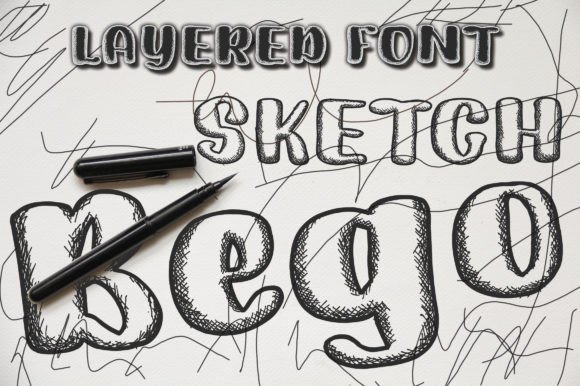
Opening Sketch Bego in Illustrator immediately sets expectations. This is not a font for body copy or corporate annual reports. It is unapologetically loud, quirky, and textured. The strokes are thick and confident, mimicking the pressure of a marker or brush pen rather than a digital vector tool. What stood out during my initial testing was the irregularity of the edges. In an era where many "handwritten" fonts still look suspiciously smooth, Sketch Bego retains enough organic imperfection to feel authentic without looking messy.
I started by setting the bakery’s name in all caps. The unique character shapes have a bouncy baseline that creates instant rhythm. Unlike rigid geometric display fonts, Sketch Bego has a natural cadence that makes short phrases feel energetic. However, I quickly noticed that the bold weight demands space. When I tried to tighten the tracking to fit a narrow business card layout, the letters began to collide in a way that hurt readability. This font breathes best when given generous negative space, allowing those thick, playful strokes to stand out as individual design elements.
Performance Across Brand Touchpoints
A pretty font on screen is useless if it fails in production. I tested Sketch Bego across five key deliverables to see if its personality translated effectively from digital design to physical application.
- Logo Design: For the primary wordmark, Sketch Bego provided immediate character. The irregular edges meant I didn't need to add artificial texture or distress effects; the font already carried that handmade weight. It worked exceptionally well as a standalone logotype but required careful kerning adjustments to balance the optical weight of wider letters like 'W' against narrower ones like 'I'.
- Packaging Labels: This is where the font truly shined. On a kraft paper sticker mockup for jam jars, the bold strokes remained crisp even at smaller sizes. The high contrast between the thick ink and the paper texture ensured legibility on shelves. However, I avoided using it for ingredient lists or nutritional info, reserving it strictly for the product name and flavor callouts.
- Social Media Graphics: Instagram carousels and story headers benefited most from Sketch Bego’s inherent playfulness. The font acts as a graphic element itself, reducing the need for additional illustrations. White text on a dark background popped beautifully, though I had to be mindful of thin inner counters which can sometimes fill in on low-resolution screens.
- Website Headers: Used in the hero section, Sketch Bego established the brand's tone instantly. As a webfont, it loads with its personality intact, but I limited its use to H1 tags only. Using it for navigation menus or subheads created visual noise that distracted from the user experience.
- Print Collateral: On business cards and flyers, the font served as an excellent accent. A single word or short tagline in Sketch Bego drew the eye, while supporting information remained in a clean sans serif. This hierarchy is crucial; the display font does the heavy lifting for attention, while the secondary typeface handles communication.
Strategic Pairing and Visual Hierarchy
Sketch Bego is a strong personality, which means it needs a quiet partner. During the bakery project, pairing it with another decorative script resulted in visual chaos. The font demands contrast to function professionally within a brand identity system.
My most successful pairing was with a neutral, humanist sans serif. The clean lines of the supporting typeface grounded the quirkiness of Sketch Bego, ensuring the overall design felt intentional rather than juvenile. For a more editorial look, a classic serif font also worked well, creating a "modern tradition" aesthetic that suited the artisanal nature of the client. If you are building a comprehensive typography system, treat Sketch Bego as the spice, not the main course. Use it for headlines, pull quotes, logo lockups, and short emphasis text. Rely on highly legible workhorse fonts for everything else.
Technical Considerations and Licensing
Before committing Sketch Bego to a client project, there are practical technical aspects to verify. While the base alphabet is robust, always check the included alternates and ligatures. In my testing, utilizing specific stylistic alternates helped resolve awkward spacing issues in certain letter combinations. These built-in features are often superior to manually adjusting vectors, as they maintain the designer’s original stroke integrity.
Equally important is understanding the licensing terms. Display fonts like Sketch Bego often have tiered commercial licenses. Before placing this font on merchandise, packaging, or a high-traffic website, confirm that your license covers the intended usage. Some desktop licenses do not automatically include webfont embedding or app usage. Taking five minutes to review the EULA prevents costly compliance issues later. Additionally, verify multilingual support if your brand serves diverse communities; specialized characters and accents may vary in quality compared to the standard Latin set.
When to Skip This Typeface
Despite its strengths, Sketch Bego is not a universal solution. Through trial and error, I identified several scenarios where this font actively works against good design:
- Long-form Text: Never use Sketch Bego for paragraphs, captions, or detailed descriptions. The irregular baseline and bold weight cause eye fatigue rapidly.
- Formal Corporate Identity: If the brand requires trust, stability, and precision (such as finance, law, or medical), this font’s playful irregularity sends the wrong message.
- Small Scale Applications: Below 14pt in print or equivalent pixel size on screen, the thick strokes merge, and the unique character shapes become indistinct blobs.
- Luxury Minimalism: Brands relying on whitespace and refined elegance will find Sketch Bego too loud and informal. It belongs in spaces that celebrate craft, fun, and accessibility.
Ultimately, Sketch Bego is a valuable tool for designers who need to inject warmth and humanity into visual identities. It solves the problem of making digital designs feel tangible and handcrafted. By respecting its limitations and pairing it thoughtfully, you can leverage its bold, quirky energy to create branding that feels genuinely personal. Just remember to let it breathe, keep it brief, and always test it in context before finalizing your design assets.