Objectis Font Review: Geometric Display Type for Branding
There is a specific moment in every boutique branding project when the safe options start to feel invisible. I was recently working on a visual refresh for an independent ceramic studio, staring at a blank artboard that felt too sterile. The client wanted something architectural yet handmade, modern but not cold. Standard geometric sans serifs were too corporate, and organic scripts felt too rustic. That is when I pulled Objectis into the workspace. As a modern, experimental display font, it immediately shifted the energy of the brand board. It wasn't just text; it was a collection of abstract shapes that happened to form letters. Testing this typeface across logo concepts, packaging mockups, and digital assets revealed both its distinct power and its necessary boundaries in professional design work.
Deconstructing the Geometric Personality
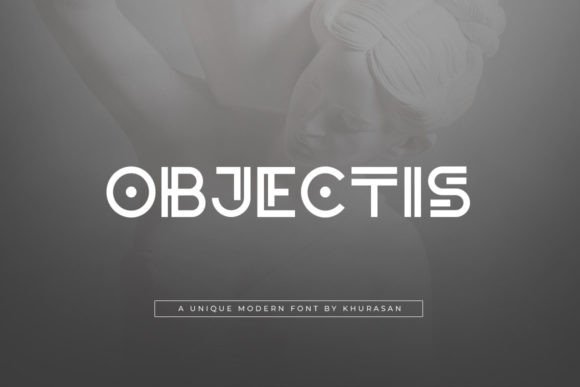
Objectis is not a font you use for body copy. It is a deliberate design choice that functions more like illustration than traditional typography. When I first typed out the studio’s name, the unique geometric style became apparent. The angles are sharp and intentional, inspired by abstract objects rather than calligraphic tradition. This gives the typeface a constructed, almost modular appearance that feels incredibly current.
In the context of modern typography, Objectis sits comfortably in the experimental category. It avoids the overused circular geometry of mid-century revival fonts. Instead, it offers unexpected intersections and negative space that create a distinct visual impact. For my ceramics project, this was crucial. The font mirrored the physical forms of the pottery—structured, sculptural, and bold. However, designers should note that this personality is dominant. Objectis demands attention and will dictate the mood of your entire brand identity. It works best when you want the type itself to serve as a primary graphic element.
Performance Across Logo Design and Packaging
The true test of any display font is how it holds up when scaled and applied to tangible assets. I started with logo design, setting the brand name in Objectis alongside a minimal wordmark. Because the letterforms are so structural, they held their integrity even when reduced to a favicon size. The geometric precision meant there were no awkward curves or thinning strokes to worry about during vectorization. It felt premium and resolved without needing excessive custom modification.
Moving to packaging design, the font took on a different role. On a matte clay-colored box, Objectis acted as a texture. The high contrast between the bold, angular letters and the soft, organic background created a sophisticated tension. This is where the font shines brightest: in short phrases, product names, or seasonal collections where readability can take a slight backseat to aesthetic expression. I also tested it on business cards. Here, I had to be careful. While stunning as a large initial or accent, using it for contact details would have been a mistake. The experimental nature of the glyphs makes small-size legibility challenging. I ultimately used Objectis only for the front of the card and the brand name on the back, pairing it with a clean, neutral sans serif for the actual information hierarchy.
Digital Applications and Visual Hierarchy
Translating experimental fonts to web design and social media graphics requires a disciplined approach to hierarchy. For the studio’s website header, Objectis provided the "stop-the-scroll" factor. In hero sections, large-scale display type is trending, and this font delivers the necessary weight to anchor a minimalist layout. The abstract shapes created interesting negative space that allowed photography to breathe around the text.
On Instagram, the font performed exceptionally well for announcement templates and quote cards. Social media feeds are saturated with similar typefaces, so Objectis helped the content stand out as distinctly branded. However, accessibility must remain a priority. Because the letterforms are stylized, I always ensured that alt-text was accurate and that critical navigation elements remained in standard, highly legible fonts. Objectis is an accent player in digital spaces, not a utility worker. Use it for headlines, campaign slogans, and limited-edition drops, but keep your UI and long-form editorial content in reliable, readable typefaces.
Strategic Font Pairing and Limitations
A font with such a strong voice needs a quiet partner. During the branding process, I tested several pairings to find the right balance. A delicate serif font created a beautiful high-low contrast, emphasizing the modernity of Objectis against classical elegance. Alternatively, a monospaced or utilitarian sans serif reinforced the architectural vibe without competing for attention. Avoid pairing Objectis with other decorative or handwritten fonts; the result is visually noisy and confusing.
It is equally important to recognize where this font does not belong. If you are designing for a law firm, medical clinic, or financial institution requiring immediate trust and traditional clarity, Objectis is likely too avant-garde. It is also unsuitable for dense paragraphs, instruction manuals, or any interface where rapid scanning is essential. The abstraction that makes it beautiful at 72pt makes it illegible at 10pt. Treat it as a specialized tool in your typography kit, reserved for projects where artistic expression aligns with commercial goals.
Licensing and Practical Implementation
Before finalizing any client work, always verify the commercial font licensing. Experimental fonts often have specific terms regarding webfont usage, app embedding, or merchandise sales. For this ceramics project, we ensured the license covered both print packaging and digital advertising. Additionally, check the included character set. Some experimental display fonts lack extended language support or punctuation marks. In my testing, Objectis covered the necessary basics, but if your project requires multilingual support or extensive numerals, confirm availability before committing to the concept.
Ultimately, Objectis is a refreshing addition to the landscape of creative fonts. It bridges the gap between graphic art and functional typography, offering designers a way to inject personality into brand identities without resorting to cliché. Whether you are refreshing a café menu, launching a skincare line, or designing posters for a gallery, this typeface provides a geometric foundation that feels both calculated and expressive. Just remember to let it lead the visual conversation while supporting it with quieter, more functional design assets. When used with intention, Objectis transforms ordinary text into a memorable brand signature.